
Article Summary: A reliable hydraulic hose connection must withstand pressure, vibration, repeated impulse loads, and demanding operating environments. A properly engineered Crimping Hydraulic Sleeve creates a permanent mechanical connection between a hydraulic hose and its matching hose stem through controlled radial compression. This article explains how crimping sleeves work, what materials and specifications matter, where they are used, and how to select the right solution for high-pressure hydraulic systems.
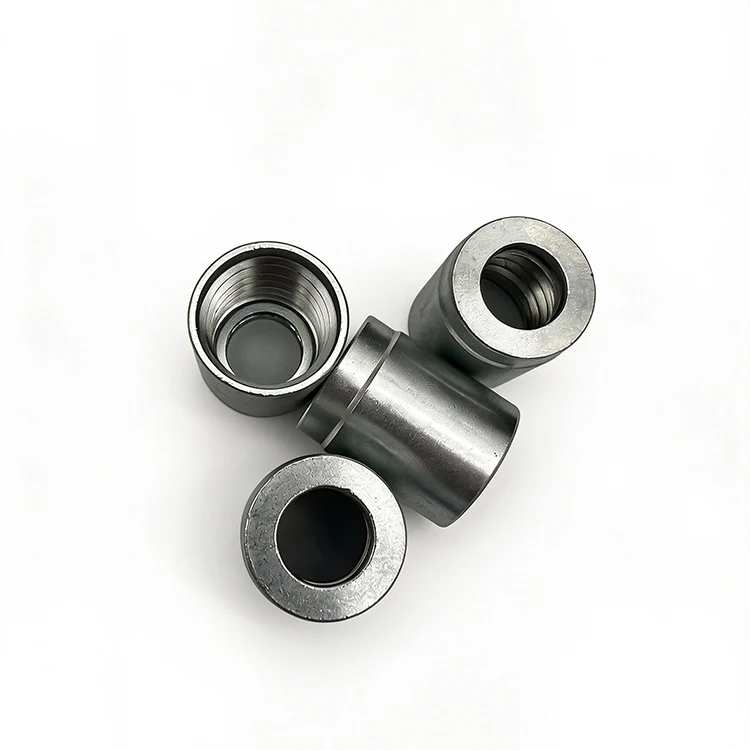
Table of Contents
- What Is a Crimping Hydraulic Sleeve?
- How Does a Crimping Hydraulic Sleeve Work?
- What Specifications Matter When Choosing a Crimping Sleeve?
- Which Materials Are Available for Hydraulic Crimping Sleeves?
- What Are the Main Advantages?
- Where Are Crimping Hydraulic Sleeves Used?
- How Should a Crimping Hydraulic Sleeve Be Installed?
- How Does Manufacturing Quality Affect Performance?
- Frequently Asked Questions
- How Can You Get the Right Hydraulic Sleeve?
What Is a Crimping Hydraulic Sleeve?
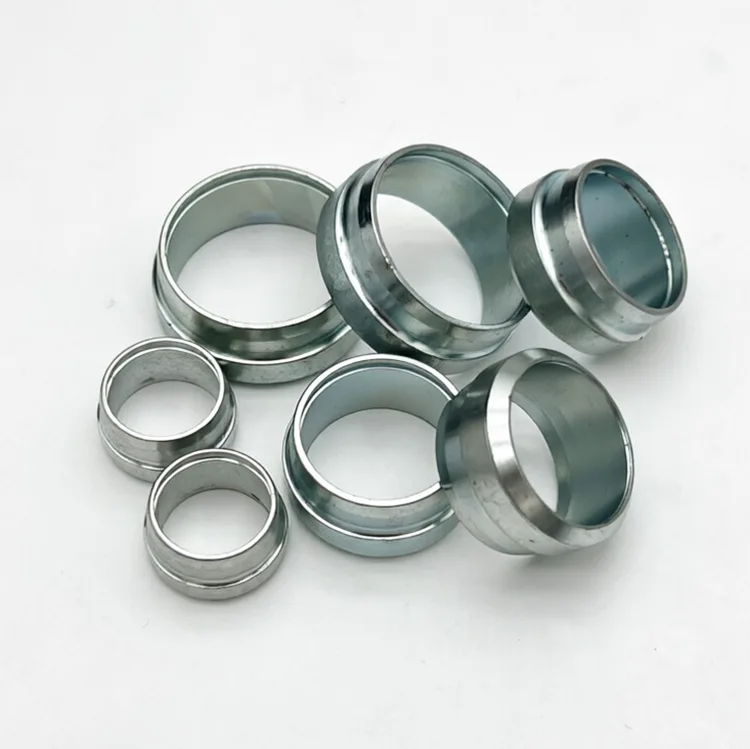
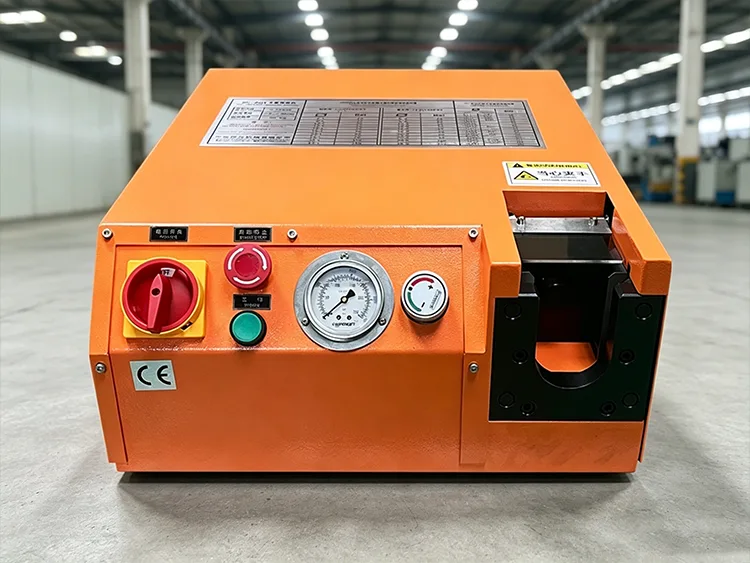
A Crimping Hydraulic Sleeve is a cylindrical metal component used in hydraulic hose assemblies. XYOON manufactures sleeves designed to work with matching hose stems and hydraulic hoses. During assembly, a dedicated crimping machine compresses the sleeve radially, causing controlled deformation around the hose and stem. The result is a permanent mechanical connection designed to resist leakage, vibration, pressure pulses, and hose pull-out.
Unlike ordinary hose clamps that rely primarily on external clamping force, a properly crimped sleeve forms a more integrated connection between the hose, sleeve, and fitting. This makes the design suitable for hydraulic applications where stable performance under high pressure is essential.
XYOON's solution is designed around commonly used SAE and DIN dimensional requirements and is available for several hydraulic hose constructions, including 1SN, 2SN, 4SP, and 4SH hose types.
How Does a Crimping Hydraulic Sleeve Work?
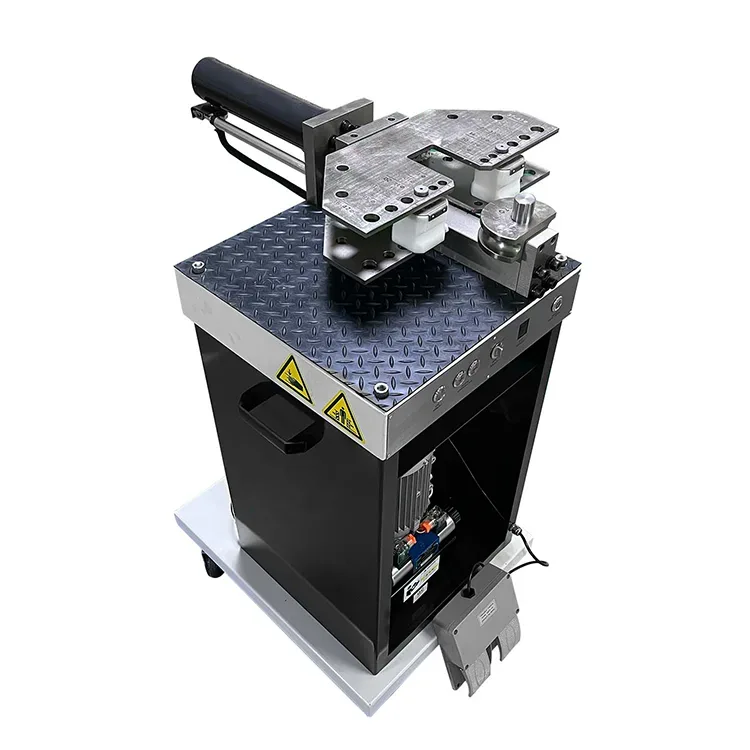
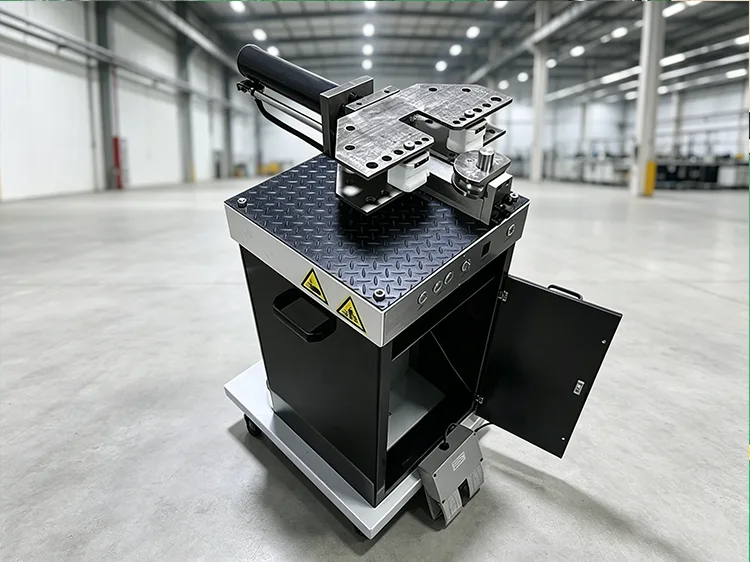
The working principle is based on controlled radial compression. The sleeve is positioned over the appropriate hose and fitting assembly before being placed into a suitable crimping machine. The machine then applies a predetermined crimping force or diameter.
- Component matching: The sleeve, hose, and hose stem are selected according to their compatible specifications.
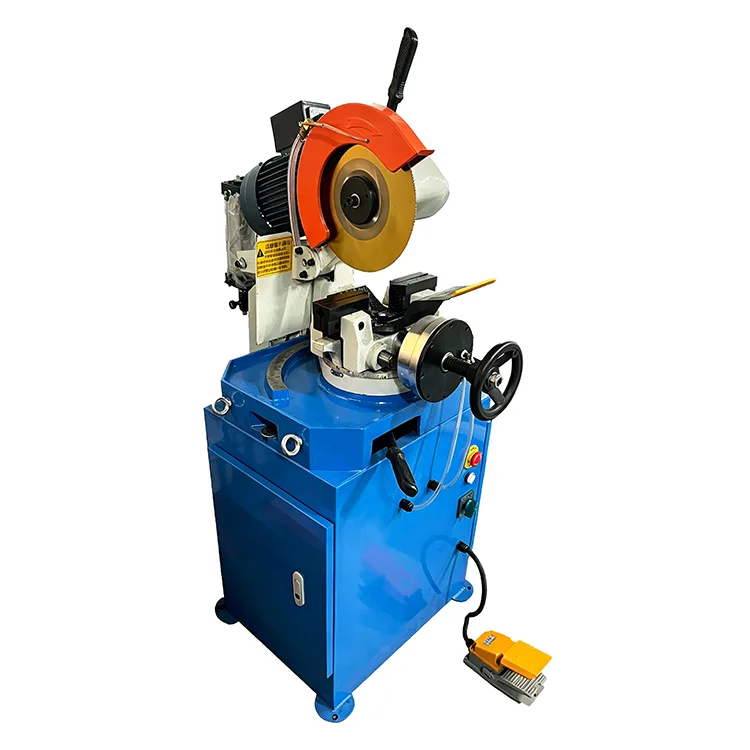
- Hose preparation: The hose is cut and prepared according to the assembly requirements.
- Assembly: The hose is inserted onto the matching hose stem and the sleeve is positioned correctly.
- Crimping: The crimping machine compresses the sleeve evenly around the assembly.
- Inspection: The finished assembly is checked for dimensional accuracy, correct positioning, and visible defects.
The crimp diameter is especially important. Excessive compression can damage the hose reinforcement or inner tube, while insufficient compression may reduce retention strength and increase the risk of leakage or pull-off. For this reason, manufacturers and hose assembly technicians should always follow the specified crimping parameters for the selected hose and fitting combination.
What Specifications Matter When Choosing a Crimping Sleeve?
Hydraulic hose assemblies operate under widely different pressure, temperature, corrosion, and mechanical conditions. Selecting a sleeve should therefore involve more than simply matching its external dimensions.
| Parameter | XYOON Specification | Why It Matters |
|---|---|---|
| Material | Carbon steel, 304 stainless steel, 316L stainless steel | Determines mechanical strength and corrosion resistance |
| Applicable Hose | 1SN, 2SN, 4SP, 4SH | Ensures compatibility with different hose constructions |
| Working Pressure | Up to 600 bar / 8700 PSI | Supports high-pressure hydraulic applications |
| Dimensional Tolerance | Up to ±0.05 mm control | Helps achieve consistent crimp deformation |
| Surface Treatment | Zinc plating, black phosphate, stainless passivation | Improves corrosion resistance and service durability |
| Salt Spray Resistance | 500+ hours for zinc-plated versions | Provides additional protection in corrosive environments |
| Applicable Standards | SAE J516 / DIN | Supports dimensional compatibility with standard systems |
For engineering procurement, buyers should also verify the hose construction, fitting geometry, crimp diameter, operating pressure, working temperature, installation equipment, and environmental exposure before finalizing a specification.
Which Materials Are Available for Hydraulic Crimping Sleeves?
Material selection directly affects how a sleeve performs in different environments. XYOON provides several material and surface-treatment options to accommodate different hydraulic system requirements.
Carbon Steel
Carbon steel provides a practical combination of mechanical strength and cost efficiency. Zinc-plated or black-phosphate finishes can be used to improve surface protection. This option is suitable for many construction, industrial, and mobile hydraulic applications where the operating environment is not excessively corrosive.
304 Stainless Steel
304 stainless steel provides stronger corrosion resistance than conventional carbon steel and is suitable for clean environments and mildly corrosive applications. Its surface can be passivated to enhance corrosion protection.
316L Stainless Steel
316L stainless steel is designed for more demanding corrosive environments. Its molybdenum-containing composition provides improved resistance to chloride-related corrosion, making it particularly useful for marine, offshore, chemical, and other harsh applications.
Choosing between these materials should be based on the actual operating environment rather than material preference alone.
What Are the Main Advantages?
A well-designed hydraulic sleeve contributes to the overall reliability of the hose assembly rather than functioning as an isolated metal component.
- Controlled dimensional accuracy: Tight dimensional control helps maintain consistent crimp deformation and assembly quality.
- High-pressure capability: Compatible configurations can support working pressures up to 600 bar or 8700 PSI.
- Vibration resistance: The permanent crimped connection is designed to remain stable under mechanical vibration and pressure impulses.
- Corrosion protection: Zinc plating, black phosphate, 304 stainless steel, and 316L stainless steel provide options for different environments.
- Hose-friendly construction: A smooth internal chamfer helps reduce unnecessary damage to the hose outer layer during assembly.
- Interchangeability: Compliance with SAE J516 and DIN requirements supports compatibility with widely used hydraulic fitting systems.
These characteristics are particularly important when a hydraulic hose assembly is installed in equipment that experiences frequent movement, pressure fluctuations, or difficult maintenance conditions.
Where Are Crimping Hydraulic Sleeves Used?
Hydraulic hose assemblies are found across mobile machinery, industrial equipment, transportation systems, and heavy-duty engineering applications. A properly selected sleeve can support reliable fluid transmission across these environments.
| Industry | Typical Applications | Key Requirement |
|---|---|---|
| Construction Machinery | Excavators, loaders, cranes, bulldozers | Pressure and vibration resistance |
| Mining | Hydraulic supports and underground equipment | Durability in demanding environments |
| Agriculture | Tractors, harvesters, irrigation systems | Reliable mobile hydraulic connections |
| Industrial Hydraulics | Injection molding machines and hydraulic power units | Stable long-term operation |
| Marine & Offshore | Ship hydraulic systems and deck machinery | Corrosion resistance and reliability |
For equipment operating in coastal, offshore, or chemically aggressive environments, stainless steel options can provide additional corrosion protection compared with conventional carbon steel configurations.
How Should a Crimping Hydraulic Sleeve Be Installed?
Installation accuracy is just as important as component quality. Even a precision-manufactured sleeve can perform poorly when the wrong hose, fitting, or crimping parameter is used.
- Confirm the hose type and size before assembly.
- Match the sleeve with the corresponding hose stem and fitting.
- Inspect the sleeve and hose for contamination, burrs, or visible damage.
- Position the sleeve and hose stem according to the assembly instructions.
- Use a suitable crimping machine and the recommended crimp diameter.
- Verify the finished crimp visually and dimensionally.
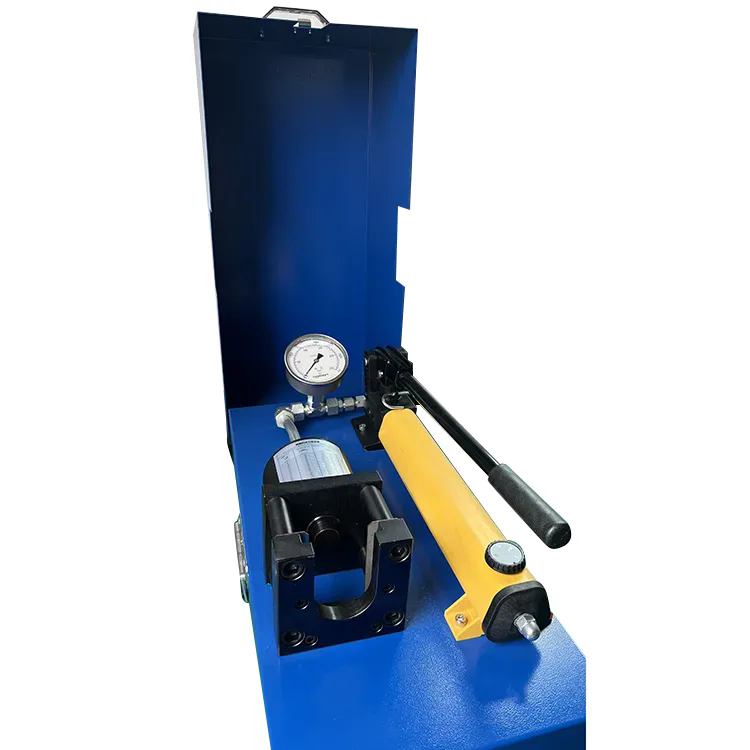
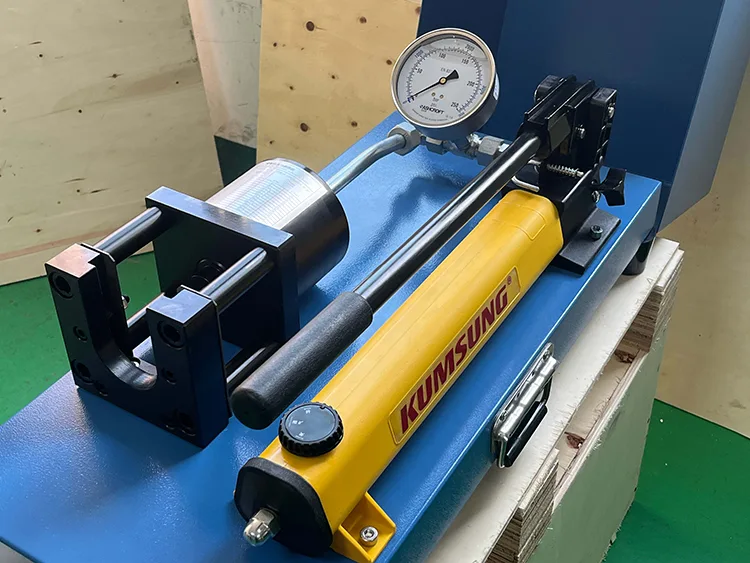
- Perform appropriate pressure or leakage testing when required by the application.
For OEM production and large-volume hose assembly, maintaining standardized crimping parameters is particularly important because it reduces variation between batches and operators.
How Does Manufacturing Quality Affect Performance?
Hydraulic sleeves operate as part of pressure-bearing assemblies, so manufacturing consistency is essential. XYOON applies a quality-control process covering raw material inspection, precision CNC machining, dimensional inspection, chamfer verification, and surface-treatment inspection.
The stated inner-diameter tolerance is controlled to ±0.05 mm, while batch surface-treatment inspection helps maintain consistent corrosion protection. XYOON also states that products are traceable through unique batch numbers, supporting quality management and production traceability.
For buyers sourcing hydraulic components from a China manufacturer or supplier, useful documentation may include material information, inspection records, dimensional data, applicable standards, and batch traceability. These details can make incoming inspection and long-term supplier management easier.
For additional information about related components, buyers can also explore hydraulic pipeline fittings and the wider hydraulic sleeve product range.
Frequently Asked Questions
1. Are Crimping Hydraulic Sleeves compatible with different hose stem brands?
Compatibility depends on dimensional specifications and the applicable hose and fitting standards. XYOON designs its sleeves according to SAE J516 and DIN requirements and states that compatible products can be interchangeable with mainstream hose stem systems.
2. Can XYOON provide crimping parameters?
Yes. XYOON provides standard crimp-diameter parameters for different sizes and can offer guidance based on the specific hose brand and assembly configuration.
3. What is the maximum working pressure?
Selected XYOON configurations are rated for working pressures up to 600 bar, equivalent to approximately 8700 PSI. The actual allowable pressure should always be confirmed against the complete hose assembly specification.
4. Are stainless steel options available?
Yes. XYOON offers 304 and 316L stainless steel options. 316L is particularly suitable for applications requiring enhanced resistance to chloride and corrosive environments.
5. Is there a minimum order quantity?
According to XYOON's product information, regular sizes do not have a strict MOQ and sample orders can be accepted. Customized sizes start from 500 pieces.
6. Which hose types can be used with these sleeves?
The listed compatible hose types include 1SN, 2SN braided hoses, and 4SP and 4SH spiral hoses. The exact sleeve specification must be matched with the selected hose and hose stem.
How Can You Get the Right Hydraulic Sleeve?
Selecting the correct hydraulic sleeve requires attention to hose construction, fitting dimensions, pressure requirements, material, corrosion exposure, and crimping parameters. XYOON supports standard and customized hydraulic pipeline fitting requirements, with technical guidance for crimping parameters, troubleshooting, and related hose assembly accessories.
If you are sourcing hydraulic hose components for construction machinery, mining equipment, agricultural machinery, industrial hydraulic systems, or marine applications, view the XYOON Crimping Hydraulic Sleeve specifications or contact the engineering team for matching recommendations. For bulk purchasing, OEM requirements, custom dimensions, or complete hydraulic fitting solutions, contact us today to discuss your application and receive a suitable quotation and technical support.