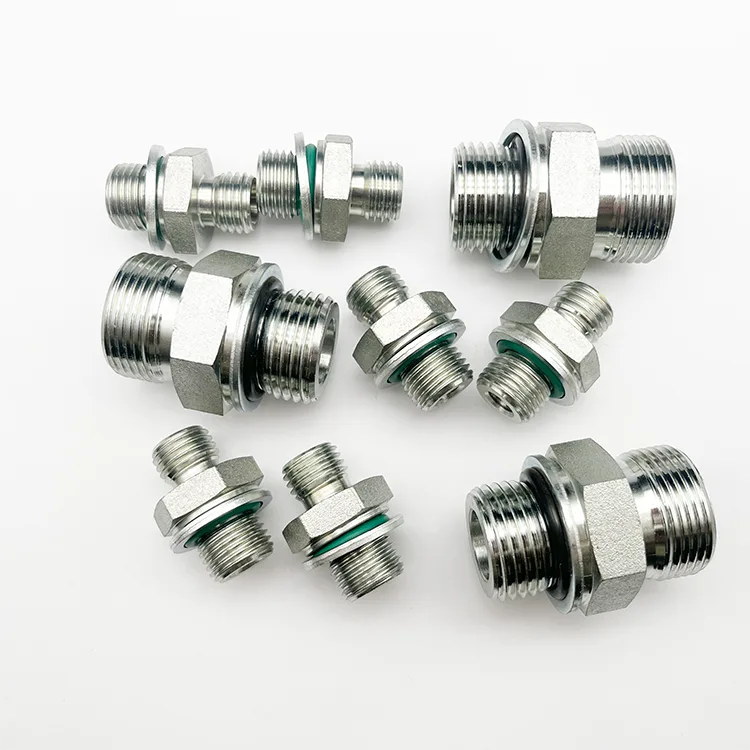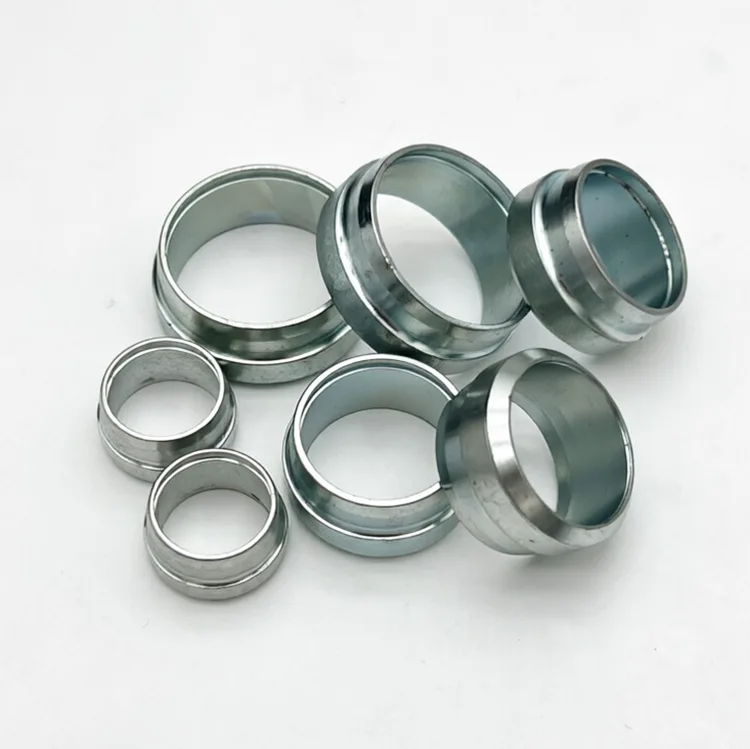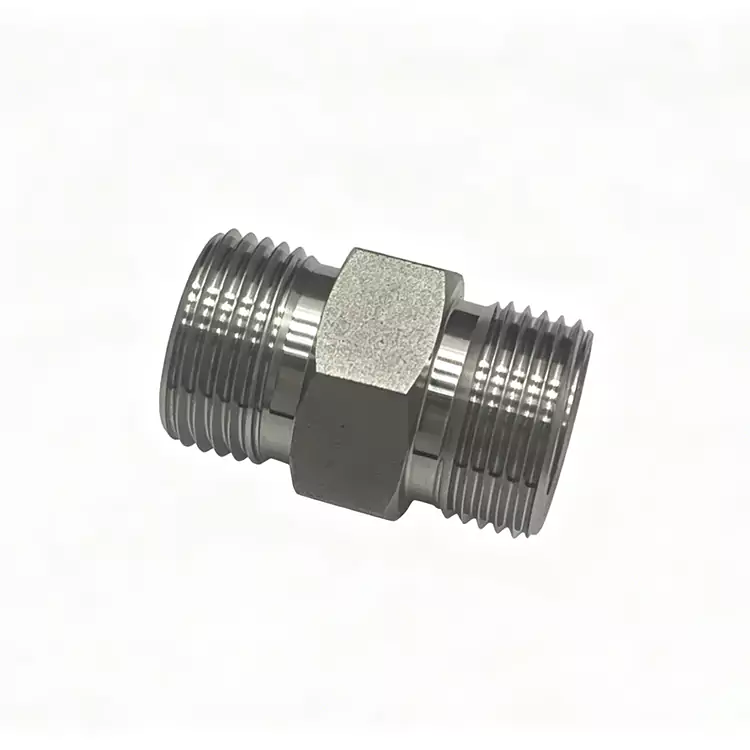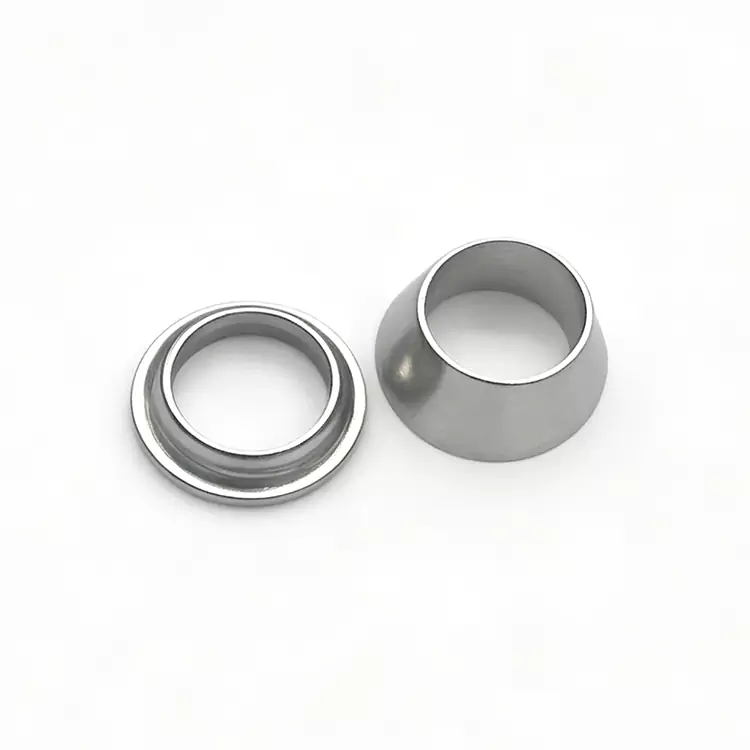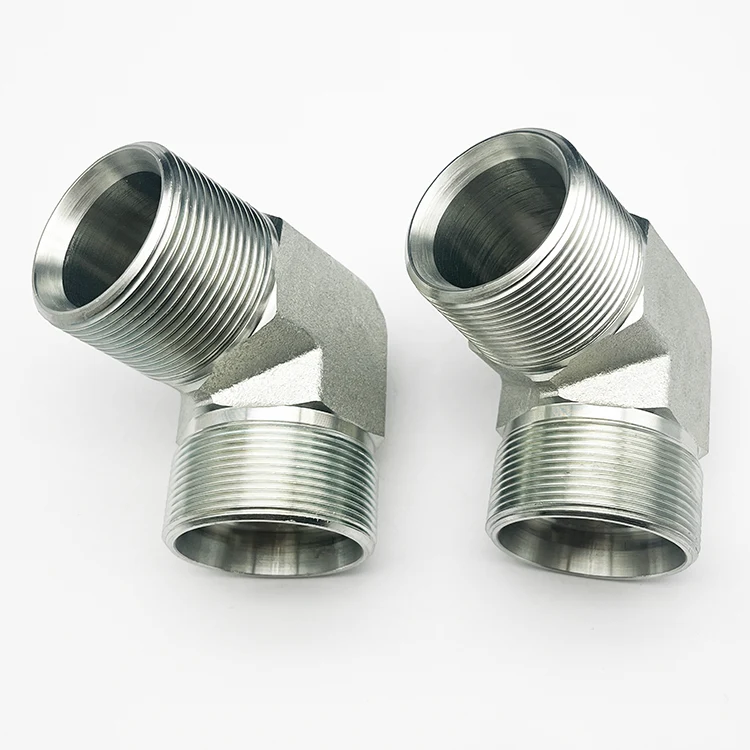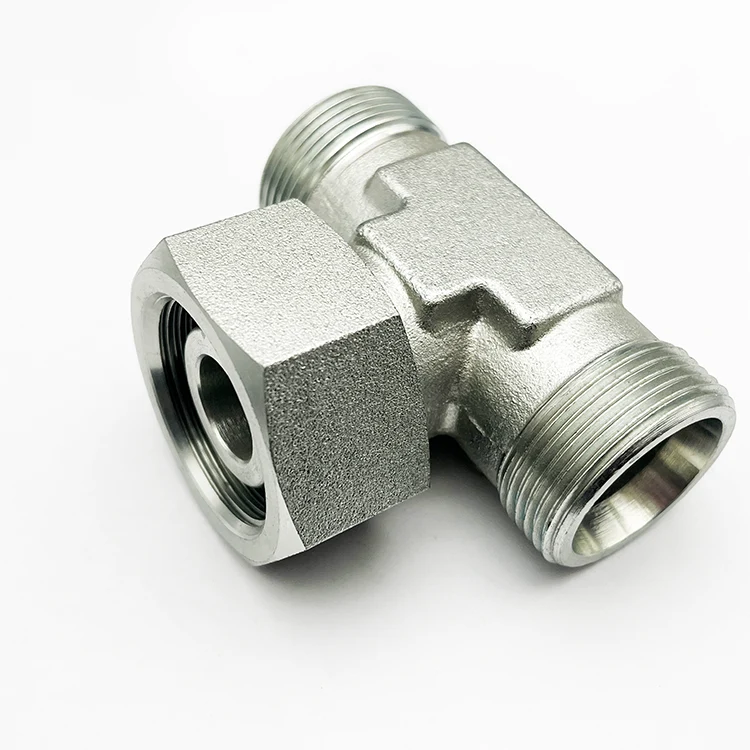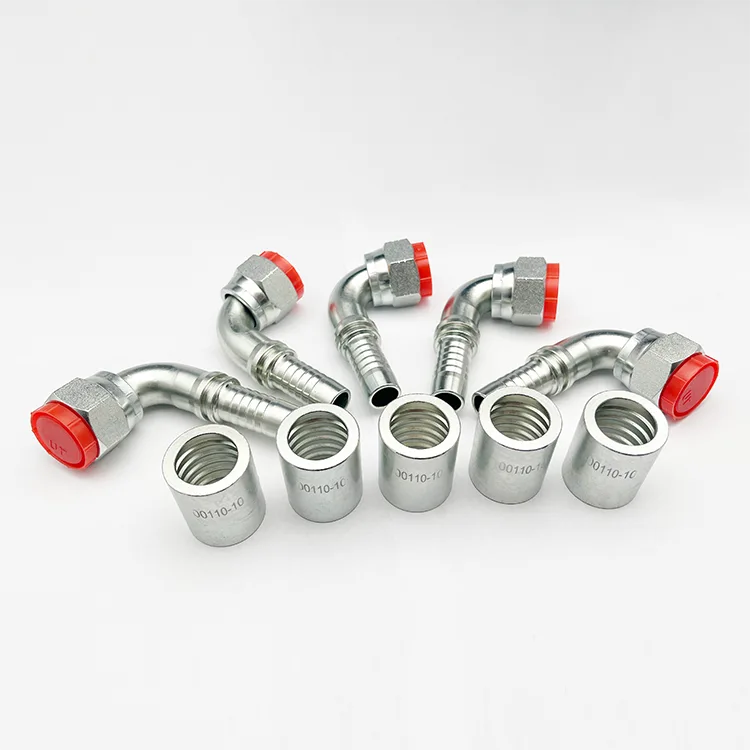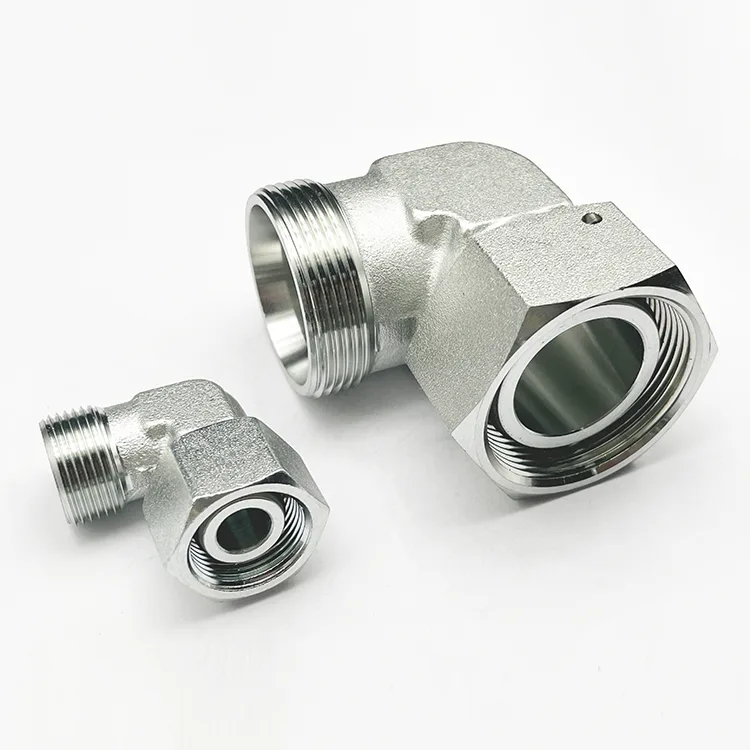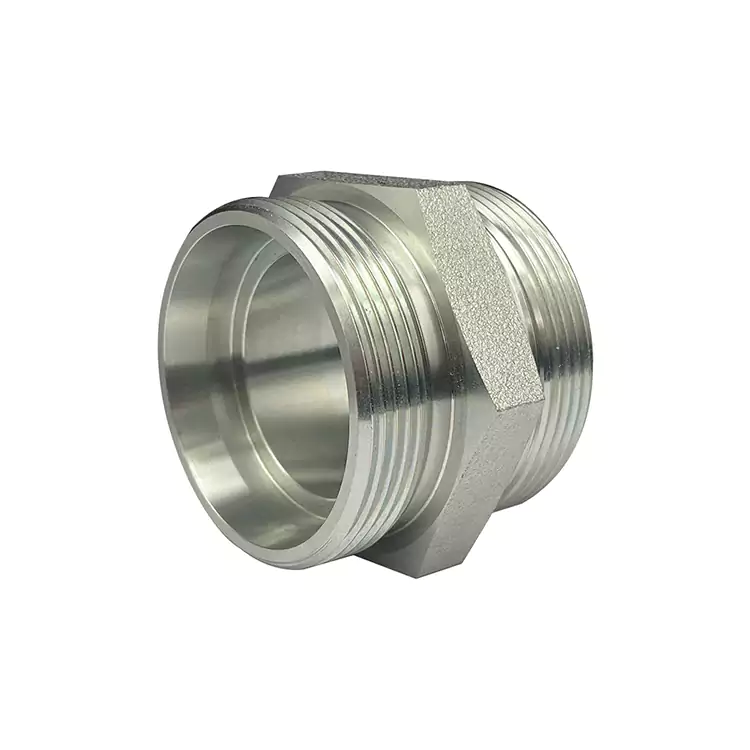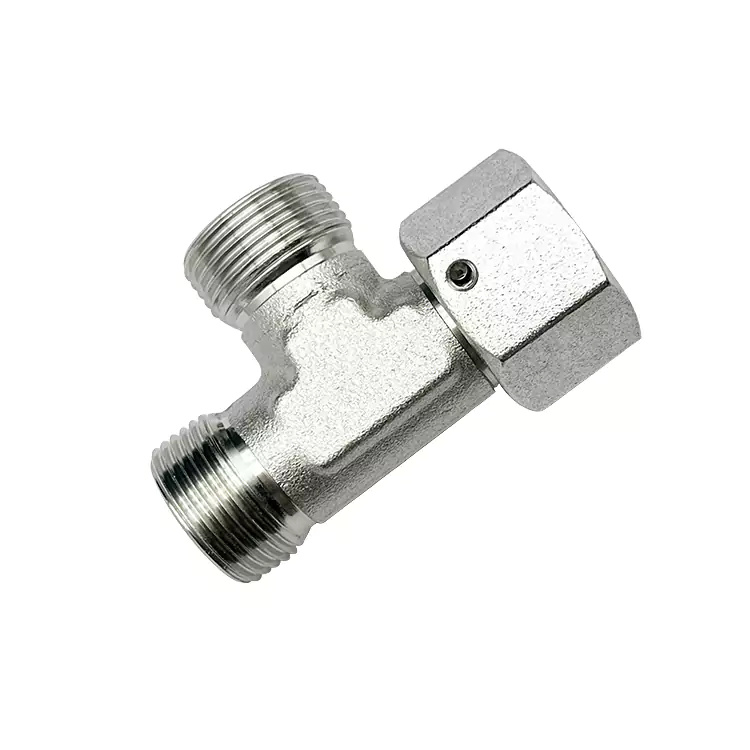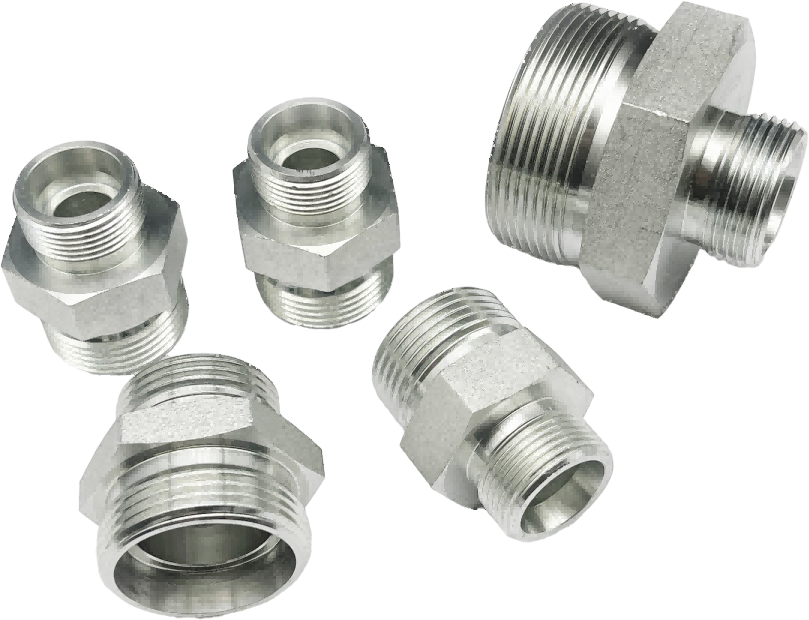
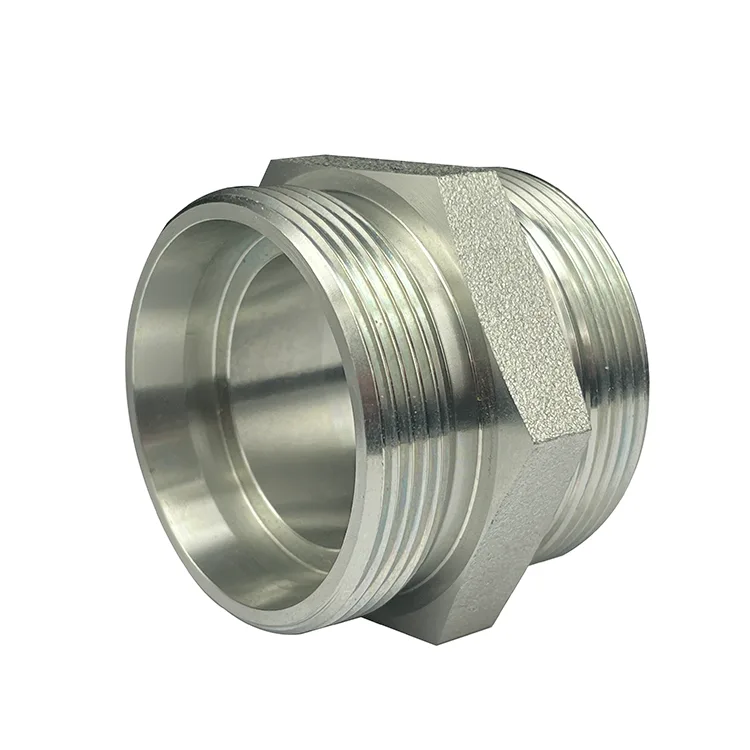
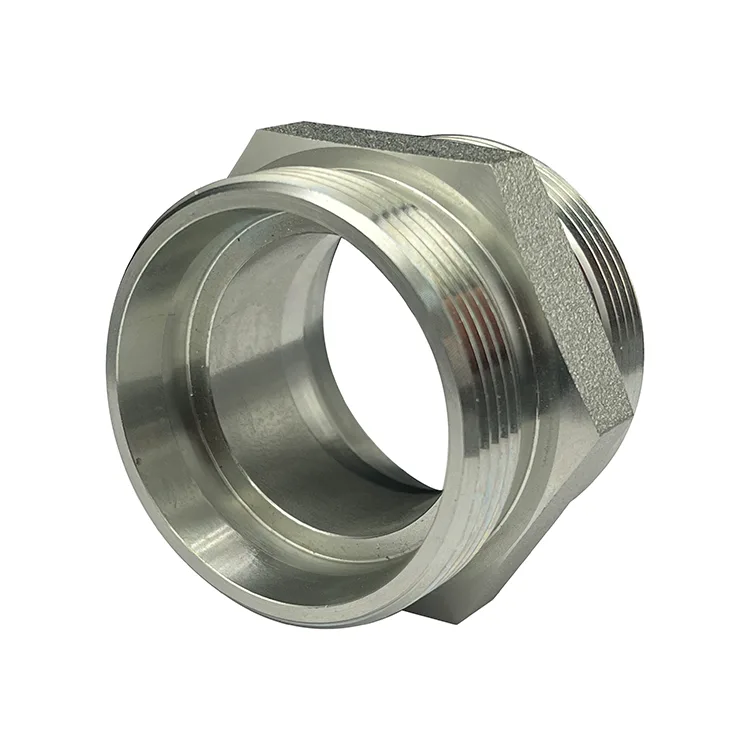
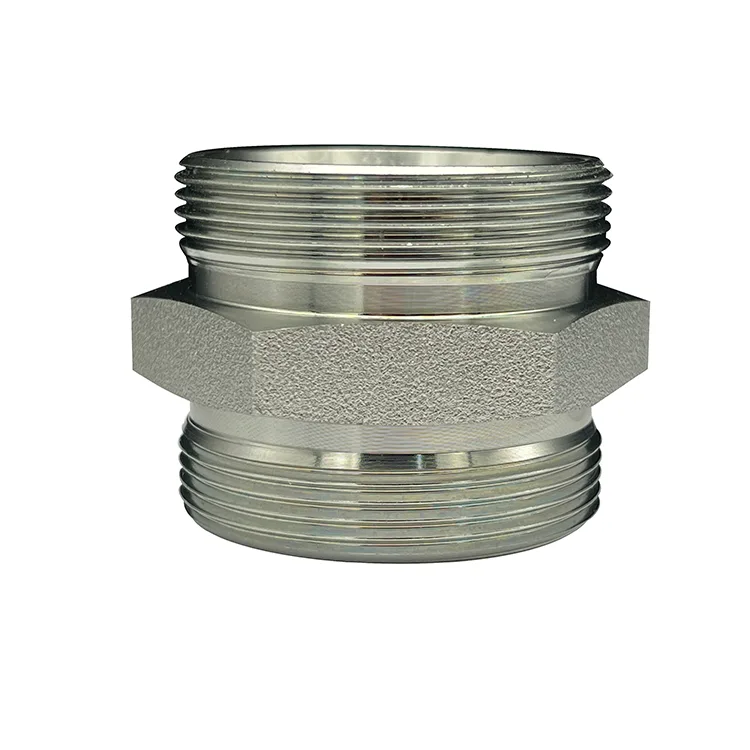
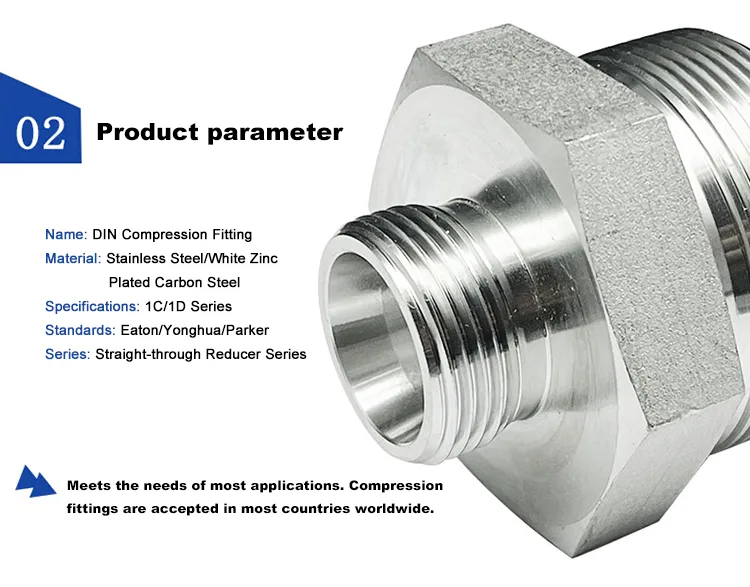
XYOON Reducer Hydraulic Fittings are precision-machined diameter conversion connectors designed to join two tubes or ports of different sizes within the same connection standard. Machined from solid bar stock with an engineered tapered transition bore, they deliver a smooth, turbulence-free diameter change while maintaining full pressure rating and perfect sealing alignment. Available in 24° compression, threaded and configuration styles across all major industry standards, they replace stacked fitting combinations with a single compact, leak-free, energy-efficient component.
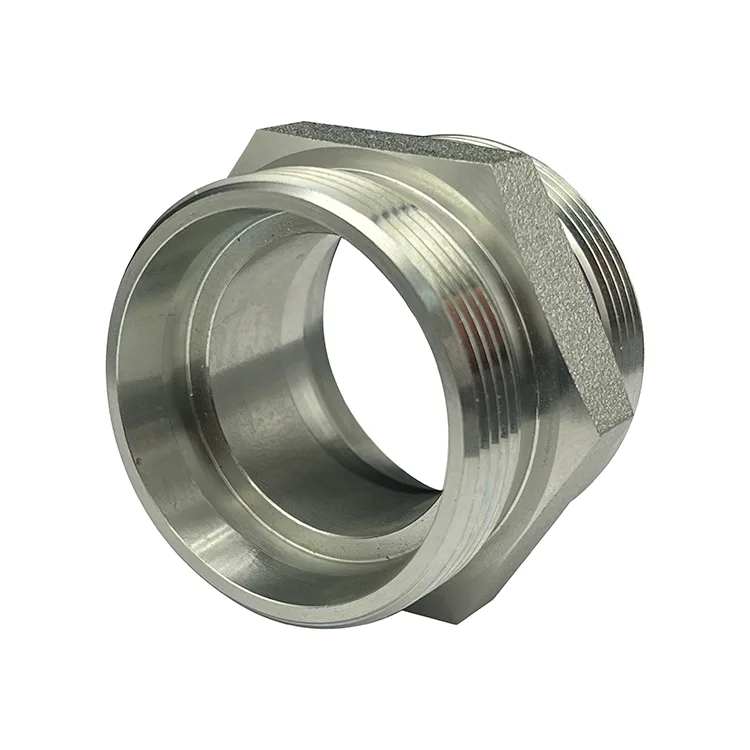
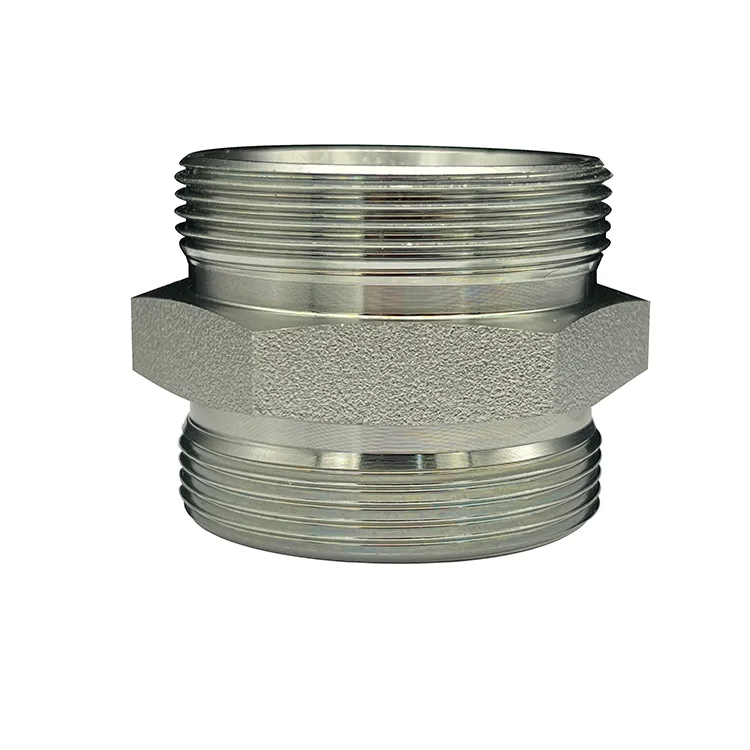
Flow-simulated smooth tapered transition replaces sharp stepped bores. Independent testing verifies 35% less pressure loss at rated flow, cutting system heat buildup and energy consumption for high-flow HPUs.
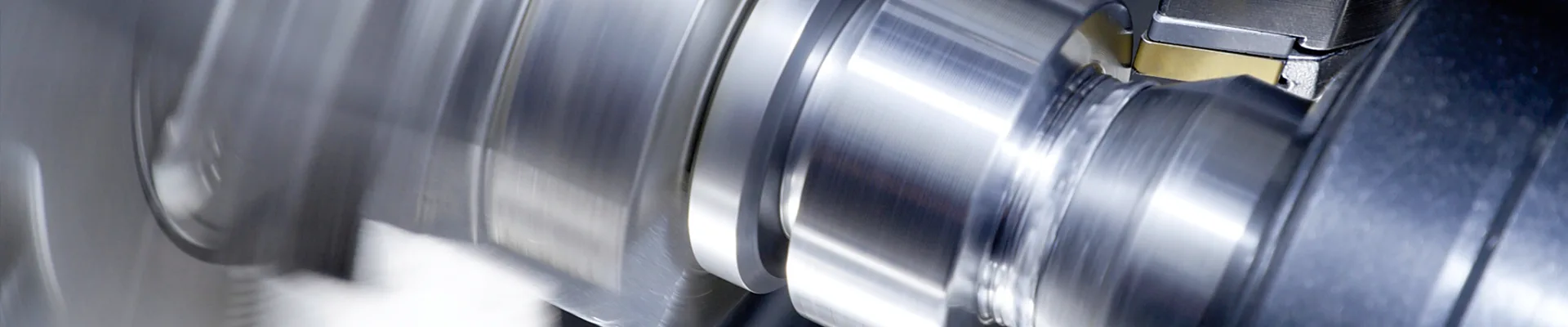
Both bores and sealing surfaces are machined in one CNC chucking to eliminate alignment error. ≤0.05mm runout ensures perfectly coaxial tubing, zero side load on seals and uniform sealing force — 4× better than welded reducers.
Extra wall thickness and blended internal fillets at the stress-concentrated diameter change point prevent fatigue cracking under pressure pulsation and vibration, verified by 1 million full-pressure impulse cycles.
Every internal bore goes through two-stage deburring and polishing, leaving no residual metal chips or burrs. This eliminates the top hidden cause of pump and valve damage from loose system contaminants.
Standard diameter ratios up to 4:1 in stock, custom ratios up to 6:1 available. Configurations cover straight reducers, 90° reducing elbows and reducing tees for all piping layouts.
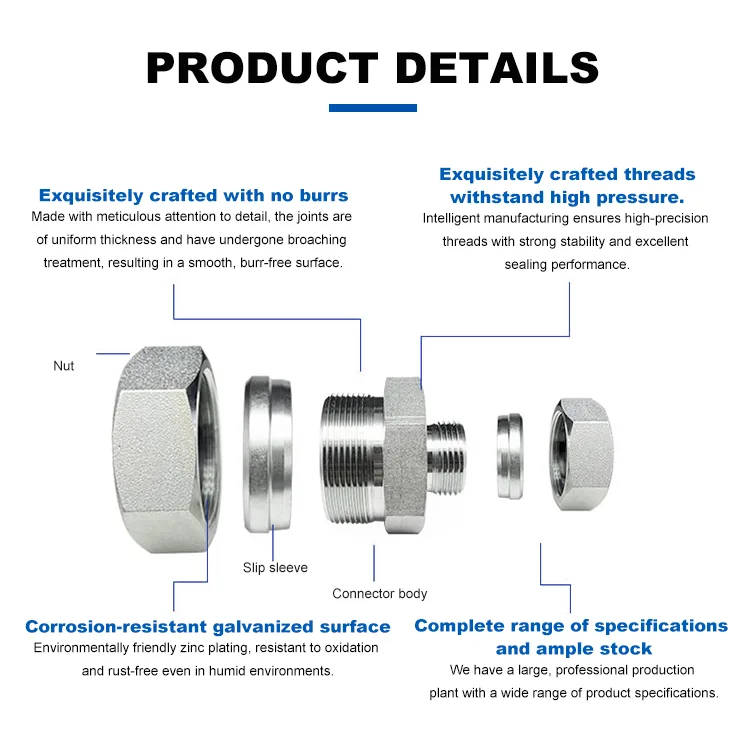
|
Parameter |
Specification |
|
Product Name |
Reducer Hydraulic Fitting |
|
Material |
Carbon Steel / Stainless Steel 304 / 316L |
|
Standards |
DIN 24°cone / NPT / BSPP |
|
Concentricity |
≤0.05mm (single-setup machining) |
|
Pressure Drop |
35% lower than stepped reducers |
|
Impulse Cycle Life |
1,000,000+ cycles |
|
Standard Ratio |
Up to 4:1 (in-stock) |
|
Custom Ratio |
Up to 6:1 (available) |
|
Configurations |
Straight reducer / 90°reducing elbow / Reducing tee |
|
Surface Treatment |
Zinc plating / Passivation / Electropolishing |
|
Bore Finish |
Two-stage deburred and polished |
Q: Will a reducer cause significant system pressure loss?
A: A properly designed tapered bore reducer causes only minimal pressure loss, typically 3–5% at rated flow. Poorly designed stepped reducers can cause much higher loss. Our design is flow-optimized to keep pressure drop as low as possible.
Q: What’s the difference between concentric and eccentric reducers?
A: Our standard product is concentric — both bores share the same centerline — used for most hydraulic and pressure lines. Eccentric reducers have offset bores, used in gravity flow or pump suction lines to prevent air pockets. We manufacture eccentric reducers on request.
Q: What is the maximum diameter ratio you can produce?
A: Standard stock reducers go up to 4:1 ratio. For custom applications, we can produce ratios up to 6:1 with fully optimized flow transition geometry.
Q: How do I select the correct reducer size for my hydraulic system?
A: We need three key parameters:
① The larger tube/port size,
② The smaller tube/port size,
③ System flow rate and operating pressure. Based on these, we recommend the optimal reducer configuration and verify that the pressure drop remains within acceptable limits for your system.
Q: What is the difference between a reducer and a reducing adapter?
A: A reducer connects two tubes or ports of different sizes within the same connection standard (e.g., both DIN 24° cone, different diameters). A reducing adapter connects different standards AND different sizes simultaneously (e.g., DIN to NPT with size change). Choose reducer for same-standard size changes; choose reducing adapter for cross-standard size changes.
Address
Changxing Road, Jiangbei District, Ningbo City, Zhejiang Province, China
Tel