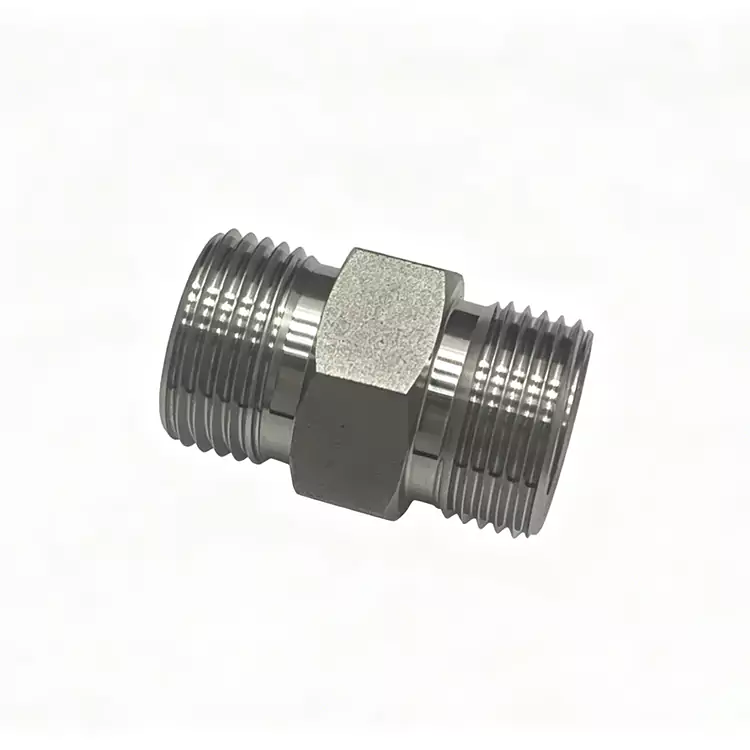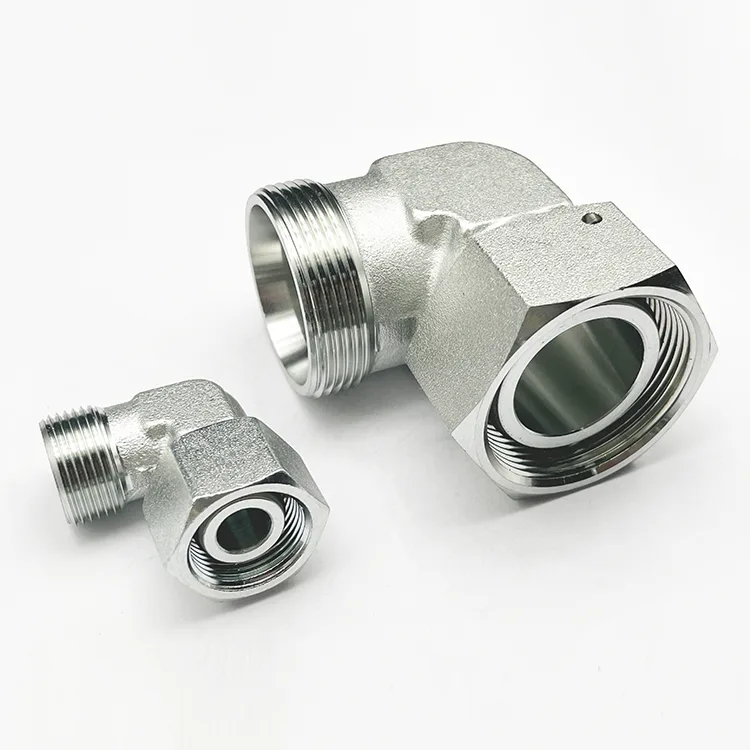

In hydraulic systems, leakage is almost never a problem with the steel tube itself — it is a problem at the connection point. For decades, 24° bite-type fittings built to ISO 8434 / DIN 2353 have been the industry default.
As a key member of XYOON’s EO fitting family, the leak-free EO-2 technology keeps everything that made traditional bite-type fittings popular — cutting-ring connection and exceptionally simple assembly — while delivering more reliable sealing and better tolerance of harsh operating conditions. This article breaks down the real differences between the two at the structural level, as a reference for purchasers, equipment maintenance teams and tube-processing workshops.
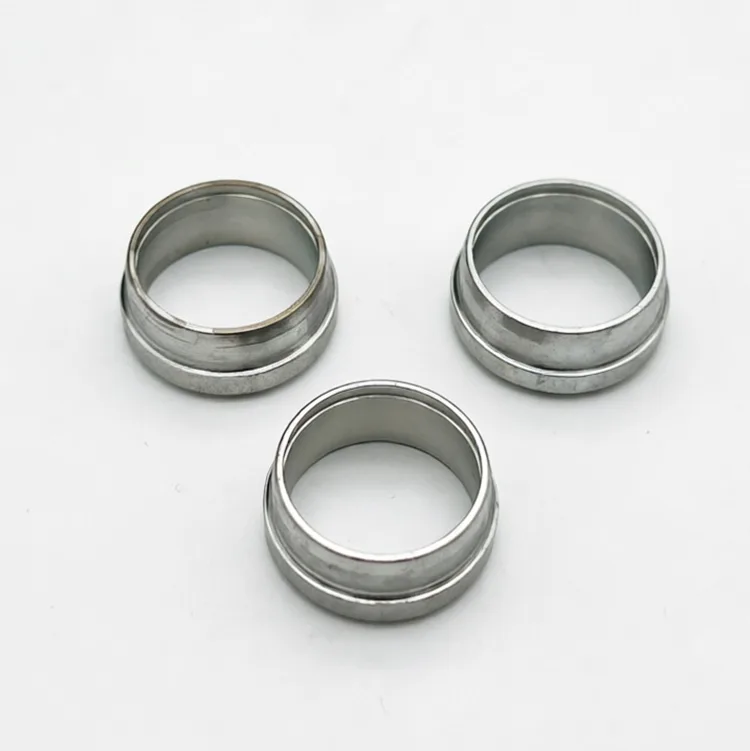
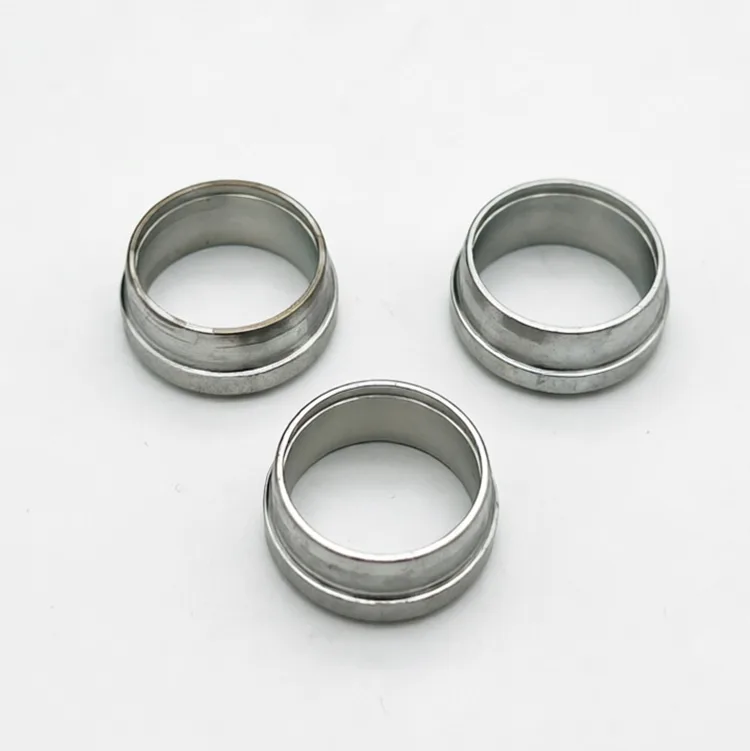
Traditional bite-type fittings (also called cutting-ring fittings) seal metal-to-metal: during assembly, the hardened cutting edge of the cutting ring bites into the outer wall of the steel tube, forming a sealing ring while anchoring the tube firmly against pull-out. The design is compact — no welding, no threading, no O-rings — and installation takes nothing more than two wrenches. That is exactly why it has become standard equipment on machine tools, injection molding machines, air compressors and mobile hydraulic equipment.
But a metal-to-metal design puts the entire sealing burden on the “quality of the bite.” In everyday production, four failure modes keep recurring:
· Over-tightening. With no axial stop, excessive torque deforms or even cracks the cutting ring, and the fitting begins to seep oil.
· Worn pre-assembly bodies. Once a pre-assembly body wears or deforms, it causes batch-wide assembly scrap, and the defect often surfaces only after the equipment enters service.
· Inspection by experience. Whether the cutting ring has bitten deep enough is judged entirely by eye and feel, which makes standardization across different shifts and operators very difficult.
· High repair cost. The fitting cone and the cutting ring are in direct metal contact, which leads to wear, deformation and fatigue damage; once damaged, the tube usually has to be replaced together with the fitting.
Another important breakthrough of the EO-2 fitting lies in the marked improvements it brings to simplified assembly, easier inspection and control, and lower maintenance cost — which is what has made it such a popular new-generation product.
Unlike conventional cutting rings, XYOON EO-2 structurally provides an oil-resistant rubber seal vulcanized onto the metal stop ring, seated between the fitting body and the tube’s outer wall, closing off the only leak path that exists in a metal-to-metal fitting. It achieves bidirectional sealing: it contains the pressurized fluid inside the tube, and it also prevents air from entering the system when the line loses pressure. More importantly, its sealing effect increases in proportion to fluid pressure, so even under high-pressure conditions it delivers an excellent seal; at the same time, the seal operates in a static pressure zone and is not subject to dynamic wear, giving it a very long service life.
Unlike conventional cutting rings, the XYOON EO-2 structurally provides a metal stop ring for axial positioning during assembly tightening, thereby avoiding the over-tightening that easily occurs with bite-type fittings, disables the cutting ring and causes leakage. Assemblers feel a definite end stop instead of guessing torque by feel, which greatly improves assembly reliability.
XYOON EO-2 fittings still comply with ISO 8434 / DIN 2353 standards and are fully interchangeable with traditional bite-type fittings, which greatly enhances their adaptability. Existing pipework layouts, spare-parts inventories and assembly habits all remain unchanged, and plants can switch over fitting by fitting without redesigning an entire machine.
To ensure the cutting edge bites deeply enough into the steel tube, traditional bite-type fittings usually require pre-assembly with a pre-assembly body, and that body must be inspected frequently; once a worn or deformed one is used, entire batches are scrapped. XYOON EO-2 structurally provides a built-in pre-assembly body — the inner cone of the stop ring serves as the pre-assembly body for the cutting ring. The stop ring, with ideal dimensional accuracy and hardness, serves both as the assembly stop and as the presetting tool for the cutting ring, making assembly easier while securing a proper result.
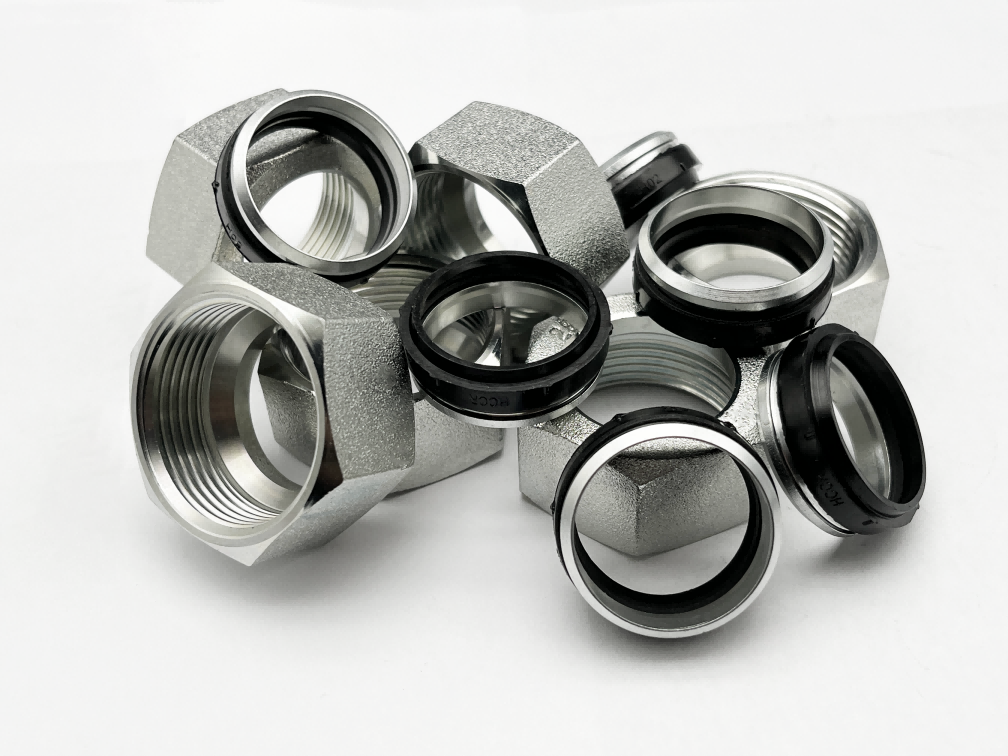
Unlike conventional cutting rings, XYOON EO-2 bonds the elastomeric seal, the stop ring and the cutting ring to the nut’s internal thread via the rubber on the outer ring of the stop ring, forming a single unit called the function nut. This prevents fitting components from scattering during assembly and greatly improves assembly efficiency.
XYOON EO-2 provides a simple and reliable criterion for checking the pre-assembly of the cutting ring: before pre-assembly there is a gap between the cutting ring and the stop ring, and once the cutting ring has bitten into the tube during pre-assembly, that gap disappears. Whether this gap is present or absent is precisely the criterion for judging whether pre-assembly is correct — a black-and-white visual judgment that anyone on the line can perform, which makes it extremely simple and reliable.
EO-2 does not abandon the cutting-ring connection; it fixes its weakest link. By adding an elastomeric seal, axial assembly positioning, a built-in pre-assembly body and an objective assembly inspection indicator, the XYOON EO-2 fitting delivers more reliable sealing, better tolerance of harsh conditions, easier assembly and lower maintenance cost, all while remaining fully interchangeable with traditional cutting rings.